
The whole point of meal prepping is simplifying your life while helping you make healthy choices, right? The problem is, if your pantry is disorganized, it quickly becomes a source of daily frustration, and it makes meal prep a lot more work than it should be. In turn, it’ll be a habit that’s a lot harder to stick with.
But here’s the good news: strategic pantry layout design changes that experience entirely.
Today, we’re going to cover how to incorporate thoughtful pantry design, specifically with making meal prepping easier, in mind.
We’ll share practices and strategies to stop your pantry from being a storage problem and turn it into a space that functions as a true support for cooking and planning.
Why Pantry Layout Matters More Than You Think
Pantries are the unsung heroes of many homes. The difference they can make in the overall organization and flow of the home is incredible.
Organized strategically, it can complement grocery unloading, daily meals, snacks, and long-term storage. When the layout does not match how the household cooks, small inefficiencies add up fast.
When things aren’t laid out thoughtfully, it not only wastes space but also contributes to visual clutter. You might stack items too deeply, have shelves sitting too low or high, and items you’ll use
Poor layouts create visual clutter and wasted space. Items get stacked too deeply, shelves sit too high or too low, and frequently used ingredients end up out of reach.
Over time, you’ll tend to find that this leads to buying items you already have (but can’t find or see), expired food, and unnecessary stress.
A well-planned pantry layout improves visibility, access, and flow. It allows you to see what you have, reach what you need, and move through meal prep without stopping to search or reorganize.
Get Clear About How You Use Your Pantry
Before planning shelves or storage containers, you’ll want to start by understanding how the pantry is used on a daily basis.
For example, some households cook most meals at home and rely heavily on dry goods, spices, and baking supplies to make them.
Others focus on quick meals, snacks, and small appliances. Some pantries support large families, while others serve smaller households with simpler needs.
The best pantry layouts reflect real habits rather than idealized routines. Planning around how often items are used, how much is stored, and who accesses the pantry makes the space easier to live with long-term.
Zone Your Pantry for Better Flow
One of the most useful strategies for stress-free meal prep is a concept known as zoning. This practice involves grouping similar items together so everything has a logical home.
Here are some ideas:
- Dry goods zone: This works well for grains, pasta, rice, canned items, and baking supplies. Keeping these items together makes it easier to see quantities at a glance.
- Snack zone: This helps both adults and children find what they need quickly. Bins or pull-out baskets work well here, especially for grab-and-go items like granola bars or pouches.
- A cooking essentials zone: Keep oils, sauces, spices, and frequently used ingredients within easy reach of the main prep area.
- A backstock zone: A space for bulk purchases, extra paper goods, or seasonal items that aren’t used every day.
Clearly defining these zones can cut down on decision fatigue and stop your shelves from turning into catch-all storage.
Shelf Depth and Height Make a Big Difference
Shelf sizing plays a larger role than many people expect. Shelves that are too deep allow items to disappear behind one another. Shelves that are too tall encourage stacking, which limits visibility.
Shallower shelves for canned goods and jars help keep labels visible and prevent items from getting lost. Deeper shelves work better for appliances or larger containers.
Adjustable shelving adds long-term flexibility. As needs change, shelves can be raised or lowered without redesigning the entire pantry.
Keeping frequently used items between waist and eye level reduces strain and speeds up daily routines. Less-used items can live higher or lower without disrupting your meal prep workflow.
How to Organize Dry Goods for Easy Access
In many homes, dry goods are the backbone of the pantry, but they’re also easy to lose track of.
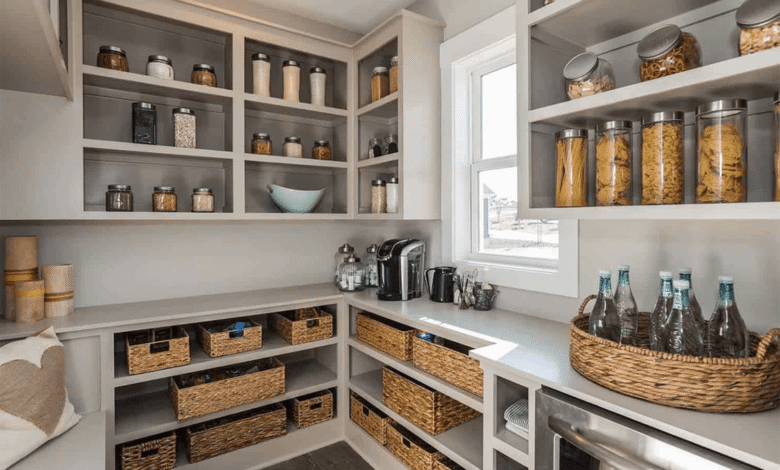
A few straightforward steps can make a big difference in keeping things accessible and in view, including clear containers. This simple switch improves visibility, which in turn prevents overbuying. When it’s easy to see how much of something you have in your pantry, it’s easier to plan meals and grocery lists.
Uniform containers also create cleaner shelf layouts. This way, you reduce wasted space caused by mismatched packaging.
Labels play a big part here, too. Simple, consistent labeling helps everyone in the household know where items belong, and this goes a long way in ongoing organization.
Grouping baking items together, keeping grains in one area, and separating breakfast foods from dinner staples simplifies access even more when you’re meal prepping.
Storing Small Appliances Without the Clutter
Small appliances are useful, but a bunch of them together quickly overwhelm any space.
Appliance garages or dedicated shelves keep items like blenders, mixers, and slow cookers accessible without taking over the space.
Pull-out shelves are especially helpful for heavier appliances. They allow items to slide forward rather than needing to be lifted from deep shelves.
Vertical storage can also work well when it comes to freeing up shelf space for appliances that need flat surfaces. This includes items such as baking sheets, cutting boards, and trays.
The goal is to keep appliances available without making them visual obstacles during everyday use.
How to Make Pantry Basics Easy to Maintain
Pantry basics include items used daily or weekly, such as oils, spices, salt, and packaged staples. These items benefit from being placed near the front of the pantry and at comfortable heights (no step stool required!).
“Lazy Susans” or turntables work well for bottles and jars, especially in corner spaces or deeper shelves.
Tiered shelving improves visibility for spices and smaller containers without taking up extra width.
Keep these items grouped together to prevent scattering and make your restocking efforts a lot faster and more predictable.
Walk-In vs. Reach-In Pantry Layouts
Walk-in pantries offer more space, but they also require more planning to avoid wasted corners and hard-to-reach zones.
Here are two options to consider:
- U-shaped layouts: This layout maximizes storage while keeping everything within arm’s reach. Shelving on three sides helps distribute weight and visibility evenly.
- L-shaped layouts: These work well in narrower spaces, leaving room for deeper storage or appliances on one side.
For their part, reach-in pantries benefit from features like door-mounted storage, pull-out shelves, and shallow shelving to prevent overcrowding.
Both styles can work well if you design them intentionally around daily use rather than maximum storage alone.
Lighting Matters More Than You Expect
Bad lighting can undermine even the best pantry layout. Don’t spend time, money, and effort on designing a perfect pantry only to jeopardize the whole space with poor lighting.
Overhead lighting alone often creates shadows, especially on deeper shelves. Integrated lighting under shelves or along vertical panels improves visibility significantly.
Good lighting makes it easier to quickly find what you’re looking for and reduces the feeling of clutter at the same time.
A well-lit pantry feels more inviting, and it will also help you keep the space better organized over time.
How to Keep Your Pantry Organized Over Time
Households change, and along with them, so do storage needs. Ideally, your pantry layout will make room for those changes.
This might mean incorporating adjustable shelves, modular bins, and flexible zones—all of which make it easier to adapt without a full redesign.
Try to avoid overly specialized storage for short-term needs. While these things might seem helpful in the near future, they won’t necessarily contribute to organizational goals in the long run.
If you design your pantry layout with current routines and future changes in mind, you can ultimately reduce the need to constantly reorganize the space.
Pantry Layouts for Calm Instead of Chaos
Stress-free meal prep comes from clarity and flow, not from cramming as much storage as possible into one space.
When dry goods are visible, appliances are accessible, and pantry basics stay organized, daily cooking becomes easier and more enjoyable.
A well-planned pantry supports routines instead of working against them. It saves time, reduces waste, and removes small frustrations that add up over the week.
With thoughtful layout choices and realistic planning, the pantry can become one of the most useful and calm spaces in the home. Contact Coastal Closets and Showers in Stuart, FL., if you’re looking for hands-on design help with your pantry and other custom spaces in your home.