
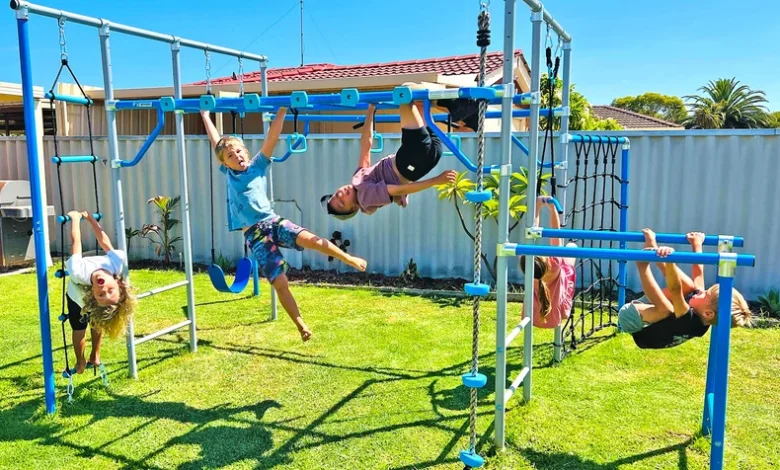
A backyard play frame is a substantial purchase, so it is worth looking beyond the first impression. Colour and accessories are exciting, but the practical details will determine whether the frame fits well, suits the children using it and remains convenient for the household.
When comparing frames from a company such as Funky Monkey Bars, begin with measurements, configuration and installation requirements. A frame can look compact in a photograph yet need considerably more space once you account for children moving around it. Asking the right questions early makes the choice much clearer.
How much usable space do you have?
Measure the intended area rather than estimating it from the back door. Note fences, trees, garden beds, washing lines and changes in ground level. Then check the dimensions and required clearances for any frame you are considering. The equipment footprint is only one part of the space it needs.
It helps to mark the proposed area on the ground with a tape measure or temporary markers. Walk around it and imagine where children will approach, climb, descend and wait for a turn. Check that adults can reach all sides where necessary. If the layout makes a familiar route through the yard awkward, reconsider the location before ordering.
Who will use it?
Think about the children’s current ages, confidence and preferred activities. A child who loves climbing may use a frame differently from one who enjoys swinging or inventing games beneath it. If siblings are several years apart, consider whether the chosen setup gives them appropriate ways to play without forcing them into the same activity.
Follow the manufacturer’s age and use guidance for individual components. A general statement that a frame is for children does not mean every accessory suits every child. Supervision should reflect the child, the activity and the height involved. It is also useful to think about visiting friends and how many children may want to play at once.
What is the ground like?
Look closely at the surface where the frame will stand. Is it reasonably level? Does water collect there? Are there exposed roots, hard edges or nearby objects that need attention? Ground conditions affect both installation and the experience of using the space.
Check the manufacturer’s instructions for anchoring, installation and any suitable surface beneath and around the frame. Do not assume that instructions for one model apply to another. If preparation is needed, include it in your budget and schedule. The most appealing frame will be less enjoyable if its location becomes muddy or difficult to maintain.
Can you see the play area clearly?
Good visibility helps adults supervise while allowing children room to play. Stand in the places you will commonly be, such as the patio, kitchen doorway or outdoor seating area. Consider whether the frame will hide part of the yard or whether planting will obstruct the view as it grows.
Sightlines matter for children too. They should be able to see where they are going when moving between features. Avoid squeezing equipment into a corner simply to preserve a larger patch of lawn. A slightly different position may make both the play area and the rest of the yard easier to use.
What will installation involve?
Before buying, find out what arrives with the frame, which tools are needed and how installation is handled. Read the assembly information for the exact model. Some families enjoy assembling equipment themselves; others would rather arrange installation. Either way, allow enough time to complete the job as instructed.
Consider practical access to the property. Large components may need to pass through a side gate or be carried around the house. Check delivery arrangements and whether someone needs to be present. These details are not as exciting as choosing colours, but they can make the day the equipment arrives much smoother.
Can the setup change later?
Children’s interests develop, and family use of the yard may change. Ask whether accessories can be added or rearranged, and what limits apply to the specific frame. A flexible setup may let you begin with a few activities and add others when you know what the children use most.
Do not buy extra features solely because they might be useful someday. It can be better to start with a configuration that fits the yard comfortably. Leave space and keep the product information if you expect to expand it. Future flexibility is most valuable when the initial setup already works well.
How will you maintain it?
Outdoor equipment lives through sun, rain and regular use. Ask what care the materials require and how often components should be checked. Find out whether replacement parts are available and read the warranty terms, including any conditions related to installation or maintenance.
Make inspections part of your normal backyard routine. Look for loose fittings, wear and changes to the ground around the frame, following the manufacturer’s guidance. Keep the area clear of objects that might interfere with play. A frame that is straightforward to inspect is easier to look after over the years.
Does it suit the whole backyard?
Finally, picture an ordinary weekend rather than a product photograph. Will there still be space to sit, garden, eat outside or play a ball game? Can children move between activities without crossing directly through a swing’s path or another busy area?
The right frame should support the way your family uses the yard, not dictate every activity that happens there. Measure carefully, read the exact product information and ask questions before committing. A thoughtful choice gives children an appealing place to play while leaving the rest of the backyard useful.