

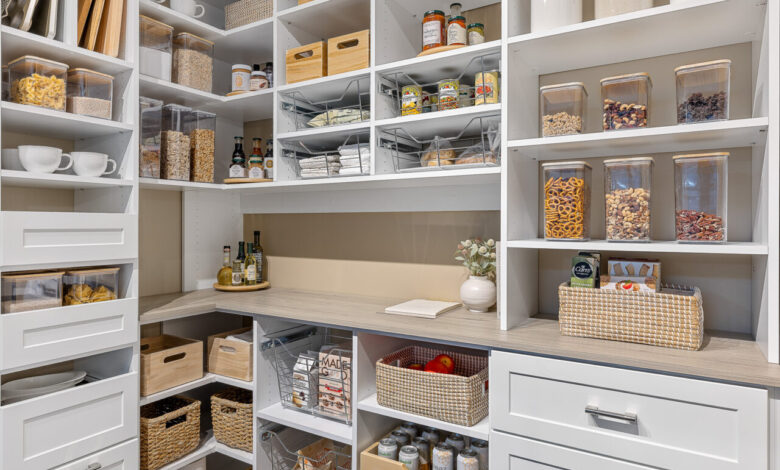
A disorganized pantry is not only an eyesore, but it wastes your time, hides what you need, and makes meal prep far harder than it has to be.
But we have good news! You don’t have to do a complete kitchen remodel to fix it. A few focused changes can help you get control of the space and make it work better for you.
13 Pantry Organization Tips
Today, we’re sharing our best pantry organization tips, and they’re all accessible steps just about anyone can employ. We’ve got real homes in mind with these tips because we want them to be as useful as possible.
1. Start With a Clean Slate
First up: take everything out of your pantry.
It may feel like a mess at first, but removing every item is the only way to see what you’re working with and understand how the space functions.
Not until the shelves are completely bare can you finally see clearly what you have, what you use the most, and what has taken up space without a purpose.
Once you’ve cleared everything out, check the expiration dates on any perishable items and get rid of anything past its prime. Things like expired spices, stale snacks, and ingredients you bought for a recipe you never made can be tossed.
Sort items into broad categories, such as baking supplies, snacks, canned goods, breakfast staples, or meal prep ingredients.
These simple piles make it easy to spot duplicates and rebuild the pantry in a way that supports your habits.
Clean the pantry shelves while they’re empty. Wipe down every surface, even hard-to-reach corners, and the areas behind where baskets usually sit.
A new surface gives you a better starting point when you put everything back and makes the space feel fresh and new the next time you open the door.
Use this opportunity to take an extra few minutes to vacuum crumbs or line shelves with an easy-to-clean material, which will also help your pantry stay tidier longer.
2. Assign Zones for Clarity
In most custom home spaces, it makes sense to keep related items together so you always know where to look.
For example, put pasta, rice, and grains in the same section, and store baking ingredients in another. Then, you might also designate a shelf for snacks or grab-and-go items—you get the drill!
When everything has a place to call home, restocking, cleaning, and organization become much easier.
3. Choose Clear Containers
Clear bins and jars let you see what’s inside instantly. Then, you don’t have to open multiple containers or sort through all kinds of packages to find the one you’re looking for.
Use them for cereal, flour, sugar, crackers, or nuts. Label each one so others in your home know where things belong.
Square or rectangular containers stack more efficiently than round ones. Uniform shapes help you use your space better.
4. Use Baskets for Loose or Bulky Items
Not everything fits neatly in a jar. Use baskets or deep bins for things like snack bags, onions and potatoes, or boxed mixes.
Assign a purpose to each basket. For example, one might hold school snacks, another baking mixes, and a third all your tea boxes.
This keeps random items from spreading out and cluttering your shelves.
5. Make the Most of Vertical Space
Tall pantry shelves often go underused, especially when items get pushed to the back or stacked in uneven piles. Adding shelf risers, wire racks, or stackable bins helps you build upward in a way that keeps everything visible.
This simple shift creates layers of storage so your cans, jars, and dry goods stop hiding behind one another.
You can also rethink how the space feels from front to back.
Floating wooden crates work well when your pantry is deep, and you need a way to pull items forward without losing track of what you have.
Ladder-style shelving gives you a lighter look while still offering room for baskets, baking supplies, or taller jars.
Both options create storage that feels thoughtful and put together, even if the rest of the pantry stays casual.
These additions are incredibly helpful in open pantry nooks where your shelving is always on display.
6. Use the Pantry Door
The back of your pantry door is an opportunity, and it’s one you definitely want to capitalize on! One great way to do that is by adding an over-the-door rack for spices, jars, or wraps.
If you want a flexible option, pegboard panels or rail systems can hold baskets or hooks and be rearranged as your needs change.
Magnetic spice racks also work well if you have a metal surface nearby.
7. Install Pull-Out Shelves
Deep shelves often lead to items being forgotten in the back. Pull-out shelves solve this problem.
These sliding trays let you view and reach everything without unloading an entire row. They are especially helpful with heavier items or small appliances.
That upgrade makes a difference in how usable your pantry feels every day.
8. Rethink Where Things Live
Place items you use most between waist and eye level so you don’t have to reach or bend to grab them.
Save the very top or bottom shelves for less-used or bulky items. Use this space for back-up supplies and seasonal items only.
Storage of things in their proper places ensures smooth daily routines.
9. Don’t Waste Corners or Odd Spaces
Pantries tucked into corners or small closets often have hard-to-reach areas. Make use of these tricky spots by giving yourself easier access to them with lazy Susans or corner shelves.
Even awkward wall space can hold mounted racks, hooks, or magnetic strips. If you have an under-stair area, consider converting it into a custom pantry.
Repurposed furniture, like an old dresser or bookshelf, can function as additional storage in a nearby hallway or kitchen corner.
10. Keep Like With Like in Sight
Along with grouping items by type, you can take things a step further and also group them by brand or use. For example, if you bake regularly, you might make package some essential baking supplies together so they’re easy to grab when you need them.
Use tiered organizers for cans and jars to keep labels visible. Place duplicates behind each other to avoid clutter and waste.
11. Create a Maintenance Routine
What good is pantry organization if you can’t maintain it? Once you’ve done the hard work of setting it up, set a reminder to check and tidy your pantry every few weeks.
Take that time to reorganize stock, throw away expired items, and work your system if it feels off.
You might notice one bin always seems to overflow. That’s a telltale sign it’s worth either adding another bin or upgrading its size. Similarly, if snacks keep ending up in the wrong spot, consider a different label or an easier-to-reach shelf.
Make small notes of what works and what doesn’t. Keep a notepad nearby or use your phone to track what you run out of most often.
This habit keeps your setup from falling apart.
12. Think About Form and Function
Your pantry doesn’t have to look like it’s ready to be featured in Architectural Digest at any given moment, but a little visual consistency can go a long way.
If you’re willing to invest in new containers and storage, opt for things in similar tones and materials so everything feels coordinated. Pick a label style that fits your home’s personality and keeps items easy to spot at a glance, too.
Small touches can go a very long way in adding warmth and customization to the space.
For example, you might add a chalkboard door to help you track staples, jot down meal ideas, and make note of groceries you need to buy. Another option is adding lighting strips so it’s easy to see every nook and cranny in the space.
13. Upgrade Your Shelving for Lasting Results
Are you finding that your pantry layout isn’t working? That’s a telltale sign that it’s time to improve the structure. Some great places to start are customized shelving, pull-outs, or vertical units, all of which can change how your pantry functions.
Shelving that works with your space makes it easier to stay organized long term.
Last Words: Bringing Your Organized Pantry to Life
A well-organized pantry helps with anything from meal prep to grocery shopping. It saves time, prevents waste, and brings a little order into your day.
Whether you take on a full pantry refresh or start with a few bins and labels, the 13 steps we shared today can help you get better results without the stress.
And when you’re ready to rethink your layout, smart shelving can give you the framework to keep it all in place.
If you’re looking for expert help reaching your pantry organization goals, reach out to the custom home spaces experts at Coastal Closets and Showers.